What is the difference between premium and luxury?
You’d probably say price and quality. And you wouldn’t be wrong. A premium product should be better. Otherwise, you’re just charging more for the same thing.
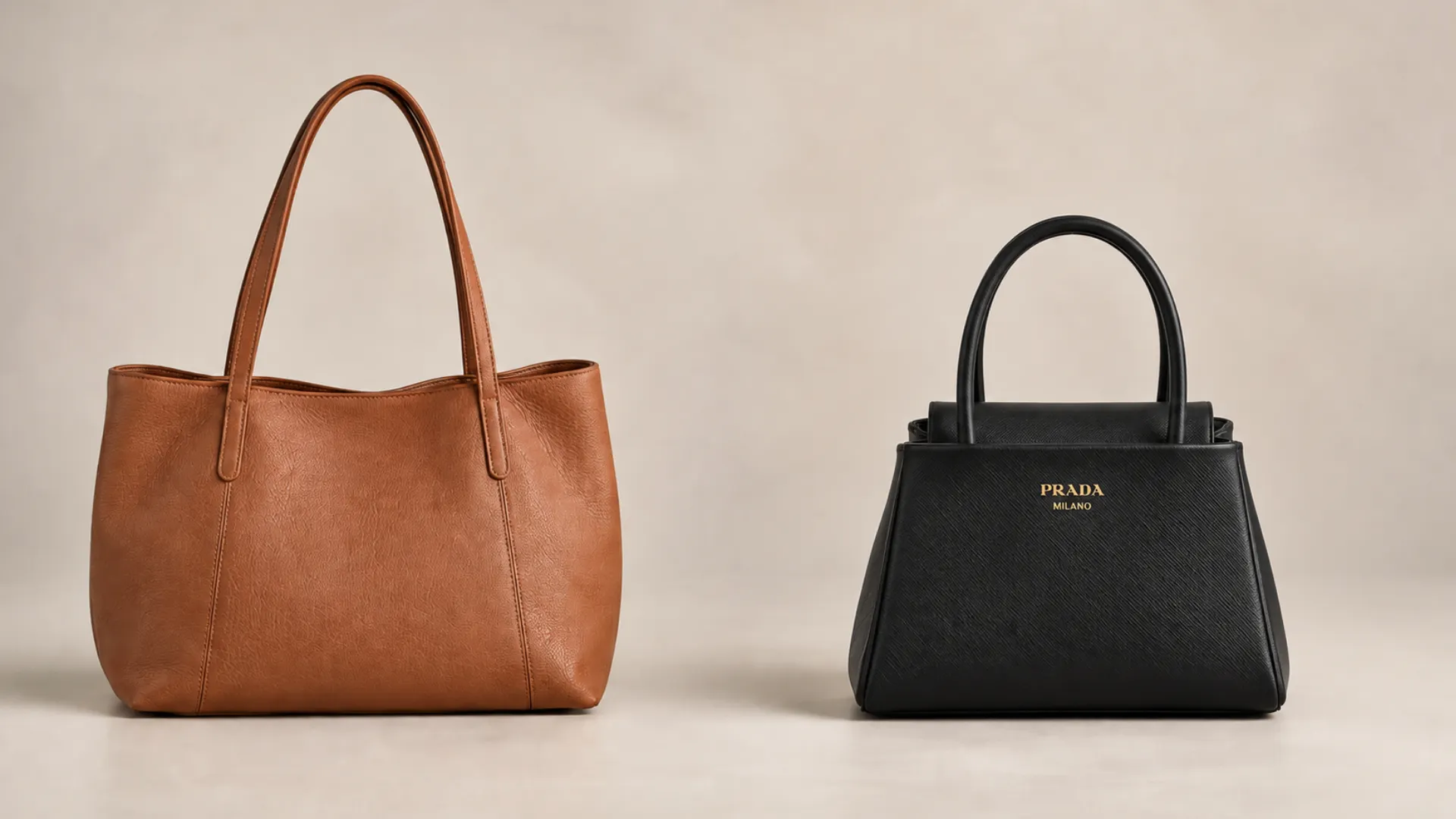
But price and quality can only explain so much. A £10,000 watch doesn’t tell the time twenty times better than a £500 watch, and a £4,000 handbag doesn’t carry things forty times better than a £100 one.
That’s where the distinction between premium and luxury becomes important.
Premium is generally a better version of something.
Luxury follows different rules.
Quality gets you into the game.
At the premium end of a market, quality is important. If you pay £6 instead of £2.50 for your coffee, you’d expect small batch single origin beans, a professional espresso machine, and a barista who makes impressive latte art.
When everything about the product is objectively better, it’s easy to compare and provides a straightforward reason to pay more.
But as you move further up the market, those things become expected. Nobody spending £2,000 a night on a hotel room is impressed by good sheets. Equally, nobody expects poor stitching on a £6,000 bag. Quality becomes the entry requirement.
This is why simply increasing the price doesn’t make your product luxurious. Price signals confidence, scarcity and quality. But everything around the brand has to support it.
If you charge £3,000 for something and everything around it feels like a £300 product, the illusion falls apart. Everything matters: The website, photography, packaging, the store, and even the person they speak to.
Because at the luxury end, the product itself is only part of what customers are buying.
In luxury, the experience becomes the product.
Premium is all about quality. Luxury starts where everything around the product becomes important too. And that’s when branding does most of the work. Not in the narrow sense of a logo or colour palette, but in how the product is experienced.
What does it represent, and what does it say about the buyer? How does it fit into their lifestyle? The further you move away from utility, the more important meaning becomes.
The brand is what gives the product that meaning. This is why strong luxury brands become recognisable. People know what Hermès or Porsche represents without needing a spec sheet.
That meaning has been built over time through product, design, communications, pricing, distribution, behaviour and experience. The object inherits meaning because the brand around it has taught people how to interpret it.
That is one of the biggest differences between making a good product and building a valuable brand.
Trust becomes more important.
At the luxury level, the cost of getting decisions wrong can seriously affect the business.
At £30, someone might take a chance on an unfamiliar brand. At £3,000 or £30,000, uncertainty matters much more.
They are not only asking whether the product will work. They are asking whether they will regret the purchase, if the product will last, or how they’ll be treated if something goes wrong.
Branding carries a lot of that trust. Weak branding can therefore become commercially expensive. Cheap-looking photography, inconsistent language, poor packaging or an ordinary website do more than make the business look less polished. They introduce doubt. And doubt makes customers choose familiar products.
The higher the price, the less room there is for those contradictions. If the brand says one thing and the experience says another, the customer has to decide which version to believe. Usually they believe the weaker one.
Strong brands create their own frame of reference.
Premium brands are often compared quite directly with competitors. Is this better than the other one? Is it worth another £50? Which has the better features?
In luxury, the strongest brands become less dependent on their competitors to establish value. They begin to create their own frame of reference. A £900 entry product changes how a £2,000 product feels. A £5,000 product changes it again.
The brand starts creating its own benchmarks. This is why range structure matters. Pricing is not just a list of numbers attached to products. Each price helps explain the others.
The same applies to distribution. Where something is sold changes what it means to the customer. A product available everywhere, permanently discounted and constantly pushed through aggressive promotions will feel different from one that is distributed carefully, presented well and harder to find.
That does not mean luxury has to involve fake scarcity or ridiculous waiting lists. Scarcity can come from capacity. Or from a deliberate choice not to be everywhere.
The same principle applies to discounting. A premium brand can usually promote more aggressively without destroying itself. Luxury has to be more careful. Once customers learn that the £2,000 product reliably becomes £1,400 in a sale, the £2,000 price starts to lose its meaning. The customer is taught to wait.
Luxury customers still need to be sold to.
You sometimes hear that luxury customers do not want to be sold to. I think that is only partly true. They still need persuasion. Every customer does. The difference is that blatant persuasion reduces desirability.
A luxury customer may be influenced by reputation, recommendation, editorial coverage, the environment, other customers, a discreet salesperson… or simply discovering something at the right moment.
All of that is selling. It just does not always feel like it. Replace selling with discovery to give the customer more ownership over the decision. They found it. They chose it. They understood why it was worth buying. A strong brand makes that process easier because a lot of the persuasion has already happened before anyone asks for the sale.
That is very different from trying to explain the whole value proposition at the checkout.
So what actually makes something premium or luxury?
Price and quality matter. But neither is enough on its own. At the luxury end, value comes from the experience surrounding the product. That is where branding becomes much more than presentation. It becomes the product itself.
A strong brand gives the product a meaning that quality alone cannot create. For any business trying to move upmarket, that is the more useful question to ask. Not simply, “Is our product good enough?” But, “Does everything around it make the price, experience and position feel believable?”